
Headless Shopify · Next.js
Your own storefront, built to measure, with Shopify in the background for products, stock and checkout. Not a theme full of app scripts, but a store that responds instantly, looks like your brand and keeps all your marketing working.
Free: I measure your current store during the intro call, so you know up front what there is to gain.
Measured at Modern Native
- 7x
- lighter product overview
- 14 MB → 2 MB
- 24s → 4s
- until the overview is visible
- Speed Index
- 6x
- fewer requests per page
- 560 → 85
- 5x
- less work for the phone
- 10 s → 2 s
Modern Native’s product overview: the old Shopify theme against the headless store, measured with Google Lighthouse (mobile), October 2026.
Why headless
Up to 7x lighter
No theme loading dozens of app scripts at once. Only what a page actually needs, loaded smartly. At Modern Native the product overview went from 14 MB to 2 MB.
Product listings that load instantly
Collections, filters and search results respond straight away. While someone scrolls, the next pages are already prepared, so clicking through feels like flipping pages.
Site-wide updates in seconds
Change a banner, offer or menu once and it’s on every page. I connect Shopify so a new price, stock level or product is live everywhere within seconds.
Landing pages and listicles in minutes
Campaign pages, comparisons and articles are built from ready-made blocks. Quick to launch for a new ad or SEO topic, and just as fast as the rest of the store.
More conversions
Speed sells. In research by Deloitte and Google, a mobile site that was 0.1 seconds faster lifted retail conversions by 8.4%.
Cheaper advertising
Google Ads weighs the experience on your landing page into Quality Score. A fast, clear page helps that score, and a higher score usually means a lower cost per click.
Easier to find, in AI too
Fast pages, clean URLs, multiple languages and product data that Google and AI search can read: price, stock and reviews right in the results.
Design without theme limits
Video banners, animation, your own typography, a quiz or product finder: your store looks like your brand, not a template.
Everything stays in Shopify
Products, stock, orders, discount codes, Shop Pay and checkout work the way you’re used to. Your team doesn’t have to learn anything new.
Free: I measure your current store during the intro call, so you know up front what there is to gain.
Comparison
Speed and weight were measured on Modern Native’s product overview, before and after.
- Product overview visible
- Shopify theme: 24 seconds
- 4 seconds
- Page weight
- Shopify theme: 14 MB, 560 requests
- 2 MB, 85 requests
- Design
- Shopify theme: Within the limits of the theme
- Fully your own, with video and animation
- Apps
- Shopify theme: Every app loads its own scripts, on every page
- Only what’s needed, where it’s needed
- Changes
- Shopify theme: Per template and section
- Change once, live everywhere
- SEO
- Shopify theme: Limited control over URLs and code
- Full control, with product data for Google
- Tracking
- Shopify theme: Separate pixels through apps
- One clean setup with Consent Mode v2
- Checkout
- Shopify theme: Shopify
- Shopify, exactly the same
| Shopify theme | Headless Shopify | |
|---|---|---|
| Product overview visible | 24 seconds | 4 seconds |
| Page weight | 14 MB, 560 requests | 2 MB, 85 requests |
| Design | Within the limits of the theme | Fully your own, with video and animation |
| Apps | Every app loads its own scripts, on every page | Only what’s needed, where it’s needed |
| Changes | Per template and section | Change once, live everywhere |
| SEO | Limited control over URLs and code | Full control, with product data for Google |
| Tracking | Separate pixels through apps | One clean setup with Consent Mode v2 |
| Checkout | Shopify | Shopify, exactly the same |
Design
A storefront of your own means your store can look like a brand, with video banners and animation like these sites I built. Click one to see it live.
- sabaparadise.comView live
Island Paradise Saba
Website in three languages · Apartments, lunchroom and bistro, Saba
A family business with three ventures under one roof: holiday apartments, a lunchroom and Island Paradise Bistro. The new site replaces the old Wix site and opens with a film of the island.
English, Dutch, Spanish · Three businesses, one site · Moved off Wix
(opens in a new tab) - emberandtable.nl
Ember & Table
Coming soon site · Grill and cocktail bar, Rotterdam
A grill in the Oude Haven where you choose your cut at the table. A loading screen and fire video set the tone, with a waitlist for the opening.
Waitlist · Fire video and loading screen · Own domain and hosting
- restaurantdedrielinden.comView live
De Drie Linden
Reopening after a fire · Restaurant, Nieuw-Beijerland
The restaurant closed after a fire. The site counts down to the 2027 reopening and keeps guests involved with a waitlist.
Countdown · Laposta waitlist · Separate mobile video
(opens in a new tab)
Case
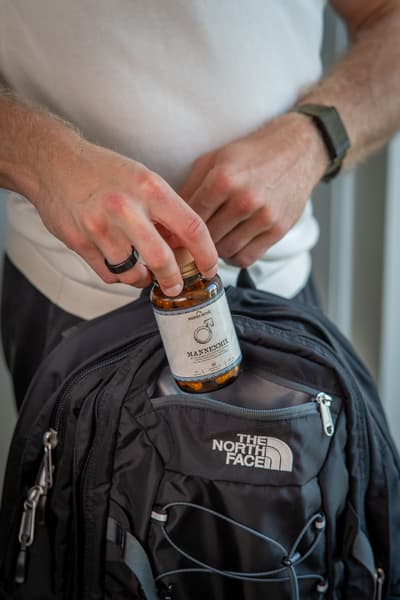
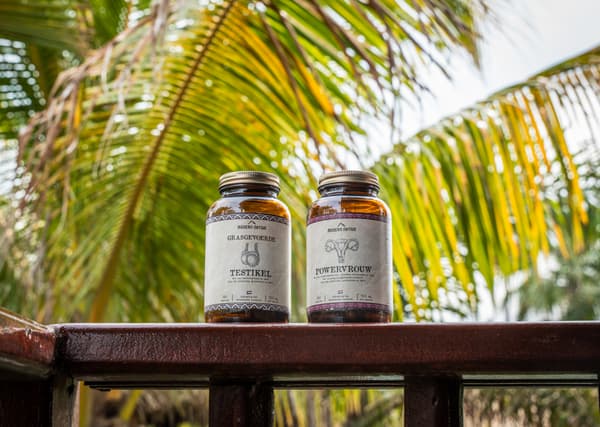
Modern Native sells grass-fed organ supplements and natural skincare. The store ran on a Shopify theme with more and more apps on top, and got slower with every addition. I built a headless storefront on modernnative.nl. Shopify still handles products, stock and checkout; everything customers see is custom code.
What I built
- Custom storefront in Next.js, hosted on Vercel
- Product finder and quiz
- Subscriptions, reviews and loyalty
- Klaviyo sign-ups inside the store
- Google Tag Manager with Consent Mode v2
- GA4 ecommerce, Google Ads, Meta and TikTok
- Consent carried into the Shopify checkout
- Product feed and redirects to the new address
What I learned on the way
After launch the classic pitfalls showed up: a product feed still pointing at the old domain, and consent that didn’t carry into checkout. I fixed them, and now check them before every migration.
modernnative.nl
Integrations
Process
Measure
I measure your current store: speed, Google rankings, tracking and what each app costs.
Design
A design for the key pages: home, collection, product and cart.
Build
The storefront is built and connected to Shopify, on a test address you can view yourself.
Tracking and feed
Tag Manager, Consent Mode, pixels and the product feed, tested from ad to purchase.
Launch
Every old URL gets a redirect, so your rankings and ad links keep working.
Keep improving
New pages, offers and tests, every month with the numbers alongside.
Honest advice
A good fit if
- you advertise seriously and every click counts
- you have lots of products or collections
- your brand needs more than a template
- you sell in several languages or countries
- your theme gets slower with every app
Not needed yet if
- you’re just starting to sell online
- you have a handful of products and little traffic
Then a well set-up Shopify theme is fine. I’ll tell you that in the intro call too.
Price
Priced to measure. You get a fixed proposal with a timeline up front, no hidden fees.
Fair prices, and no surprises afterwards.
No inflated prices
You pay for the work, not for a fancy office or layers of account managers.
No hidden fees
What’s in the proposal is what you pay.
Nothing without your OK
If something extra comes up, you hear the price first.
Ad budget without a markup
You pay it directly to Meta and Google.
No minimum term
Stop any month. I should have to prove it works, every month.
Free intro call
Half an hour, no strings. Then you decide.
What is headless Shopify?
You use Shopify for products, stock and checkout, but the store your customers see is a website of its own. You decide how fast and how good it looks, without the limits of a theme.
How much faster will my store get?
That depends on your current theme and apps. At Modern Native the product overview became 7x lighter, with 85 instead of 560 requests, and was visible in 4 seconds instead of 24 (Google Lighthouse, mobile). Before we start I measure your current store, so you know up front what there is to gain.
Can I still manage products in Shopify?
Yes. Products, prices, stock, discount codes and orders work the way you’re used to. The store pulls everything from Shopify automatically, and changes are live within seconds.
Will my Shopify apps still work?
Apps that work in the background or in checkout, such as payments, shipping and subscriptions, keep working. Apps that show something on the store pages, like reviews or sign-up forms, I connect again in the new store. At Modern Native that included Klaviyo, Judge.me and subscriptions.
Will I lose my Google rankings?
Not when it’s done properly. Every old URL gets a permanent redirect, the product feed and Search Console move to the new address, and after launch I check that Google has picked everything up.
Will my ads and tracking keep working?
Yes, that’s a big part of the job. I set up Tag Manager, Consent Mode v2, the pixels and the product feed, and test the path from ad to purchase myself.
How long does it take?
Usually a few weeks to a few months, depending on the number of pages, languages and integrations. You get a timeline up front and can view the new store on a test address while it’s being built.
What does a headless Shopify store cost?
It depends on the scope. After a free intro call, in which I also measure your current store, you get a fixed proposal with no hidden fees.
Contact
Tell me briefly what you’re after. Your message goes straight to me on WhatsApp.
- WhatsApp +31 6 4261 4613
- Or call +31 6 4261 4613
- Rather email? info@rumfunk.nl
Rather pick a time yourself?
Pick a time